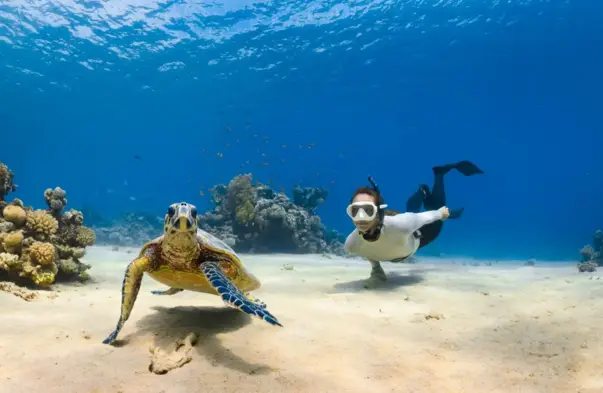
Coral reefs are among the most diverse ecosystems on Earth, supporting roughly a quarter of all marine species despite covering less than 1% of the ocean floor. Yet these underwater ecosystems are also among the planet’s most threatened environments.
Climate change, warming oceans, pollution, overfishing, and destructive tourism practices are placing enormous pressure on reefs worldwide. In response, marine conservation groups are increasingly emphasizing the importance of responsible coral reef tourism, the idea that travelers themselves can help protect reefs through everyday choices made during vacations and ocean activities.
According to the United Nations Environment Programme (UNEP) and the Reef-World Foundation’s Green Fins initiative, tourism can either damage coral ecosystems or become part of their protection depending on how activities are managed.
Green Fins is currently the world’s only internationally recognized environmental standard for marine tourism, working with dive operators, snorkel businesses, and coastal tourism providers to reduce reef damage.
One of the most important principles of responsible coral reef tourism is avoiding direct contact with reefs. Corals may look like colorful rocks or plants, but they are actually living animals that can be easily damaged by touch, fins, anchors, or careless swimming.
Even brief physical contact can break fragile coral structures or remove protective layers, making corals more vulnerable to disease and bleaching. Marine guides, therefore, encourage snorkelers and divers to maintain proper buoyancy and avoid standing or resting on reef surfaces.
Sunscreen choices also matter more than many travelers realize. Certain chemicals commonly found in sunscreens, including oxybenzone and octinoxate, have been linked to coral bleaching and developmental damage in marine organisms.
As a result, reef-safe sunscreen has become a growing part of responsible coral reef tourism. Travelers are increasingly encouraged to choose mineral-based sunscreens that avoid harmful chemicals or to wear UV-protective clothing instead.
Plastic pollution is another major threat. Single-use plastics often end up in oceans, where they can damage coral ecosystems and harm marine wildlife. Conservation groups recommend carrying reusable water bottles, bags, and containers while traveling in coastal areas.
Responsible coral reef tourism also involves choosing operators that follow sustainable practices. Green Fins-certified dive centers, for example, train staff in environmentally safe diving methods, prohibit harmful wildlife interactions, and reduce waste and pollution associated with marine tourism.
This matters because poorly managed tourism can significantly stress reef ecosystems. Boats dropping anchors onto reefs, feeding wildlife, collecting coral souvenirs, or overcrowding sensitive areas can all contribute to long-term degradation.