By Jill Nelson-
When 42-year-old Mohsen Rashidi saw the Iranian security forces shoot his friend, a two-time national powerlifting champion, he didn’t hesitate. He rushed to his friend’s side. Regime forces rushed there too—then beat Rashidi, forcing him to retreat to safety.
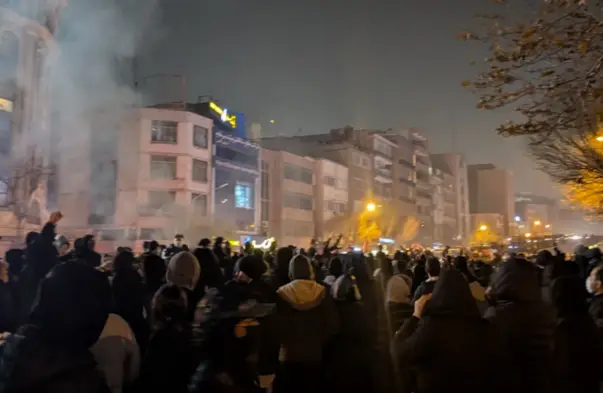
Some witnesses said millions flooded streets in 4,000 locations across Iran on January 8–9, including in Isfahan Province, where Rashidi—a Christian convert and father of three girls—joined the protests. At the same time, the government shut down the internet, cutting off Iran from the rest of the world.
After security forces temporarily retreated on January 9, Rashidi returned to his friend, who lay dead on the street. “Then he tried to carry the body,” said Mansour Borji, director of Article 18, a London-based organization focusing on religious freedom in Iran. Borji said families have reported that authorities refused to release bodies unless relatives paid large sums of money.
As Rashidi attempted to retrieve his friend’s body, security forces shot him in the leg. Several protesters took Rashidi to a hospital, but regime agents refused to grant him entry, and he bled to death, Borji said.
Rashidi was one of 11 Iranian Christians whose deaths Article 18 has confirmed in the wake of bloody crackdowns against protesters last month that rights groups say left more than 6,000 people dead. Borji has also heard about the deaths of at least 7 Christians among the Armenian community in Iran. A weeks-long internet blackout prevented many Iranians from sharing the atrocities they witnessed, but as partial connectivity returned, Borji noted, graphic images and details about the deaths emerged. Two officials of Iran’s Ministry of Health told Time that the actual death toll could be more than 30,000, although reporters could not independently verify that number.
If it is accurate, this was one of the worst killings “not only in Iranian history but perhaps in modern history, in just two days,” Borji said. Meanwhile, Iranian officials put the death toll at about 3,100 people.
What began on December 28 as large-scale protests against Iran’s economic collapse quickly snowballed into a nationwide movement calling for the end of the regime. Reza Pahlavi, the former shah’s son, who spent most of his adult life in exile in the United States, urged Iranians to take to the streets “to fight for their freedom and to overwhelm the security forces with sheer numbers.”